Diving Deeper with Dr. Neil Hammerschlag

neil_hammerschlag1

Briefly can you describe the focus of your research and the species you work on?

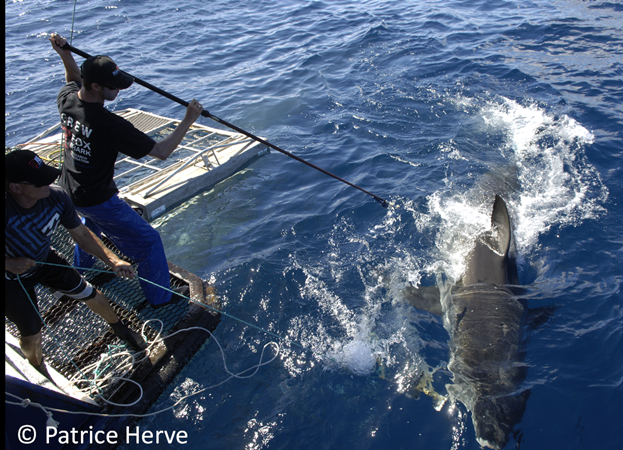
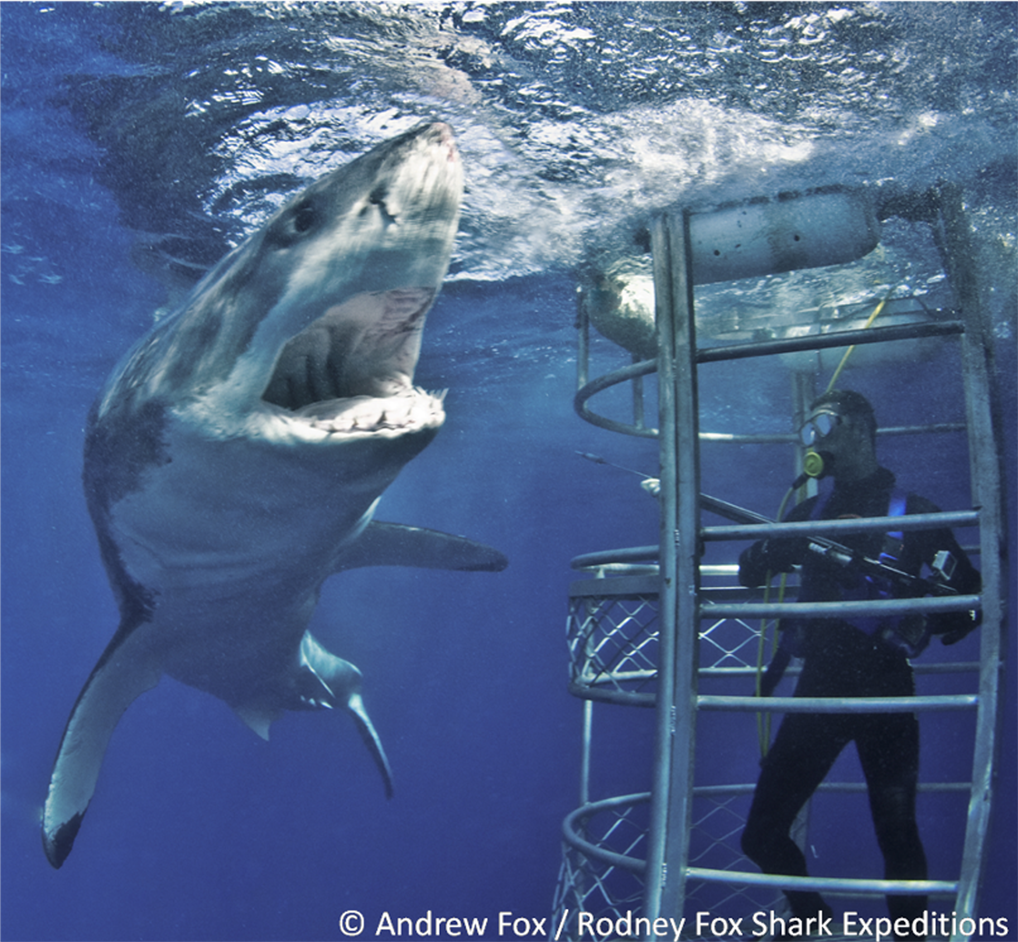
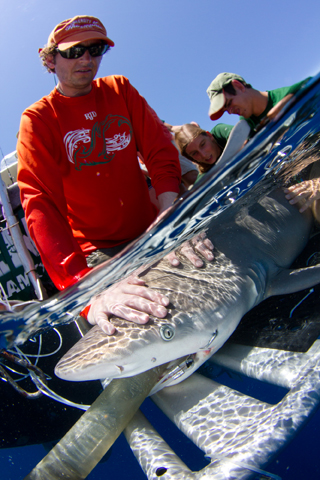
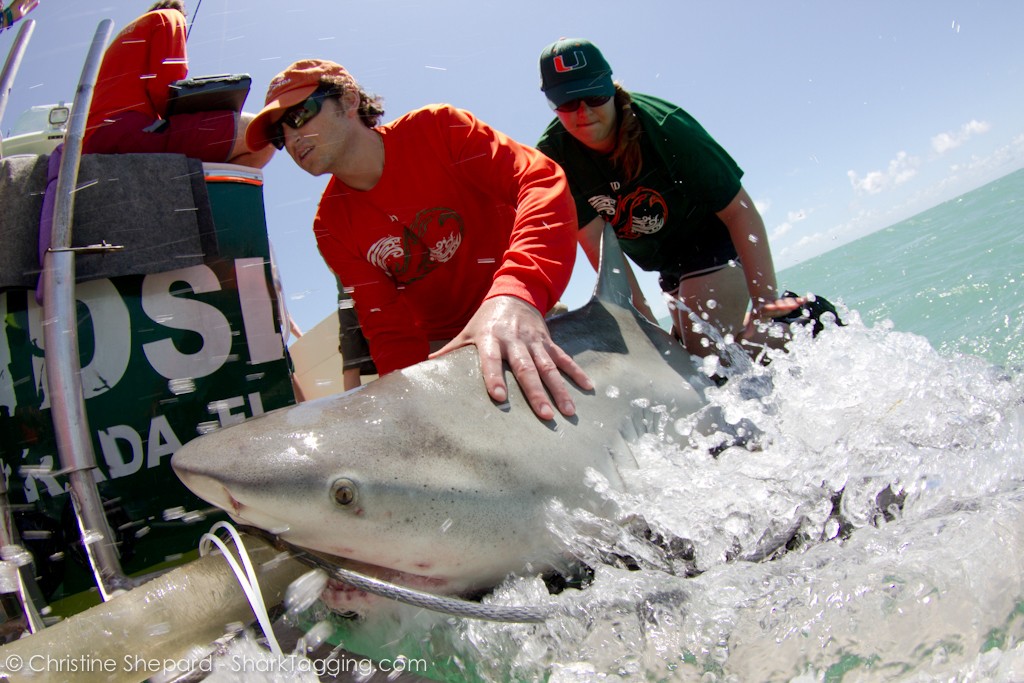
My research centers broadly on the behavioral ecology and conservation biology of marine predators, with a particular focus on sharks. My current and future research has three core themes: (1) understanding how predator-prey interactions impact individual traits, community structure and ecosystem processes through trophic cascades; (2) evaluating the ecological and evolutionary implications of variation in physiological and morphological adaptations on the movement ecology of marine predators; and (3) examining how coastal urbanization affects the behavior, ecology and fitness of highly mobile fishes. I study a wide variety of sharks including white sharks, bull, lemon, blacktip, nurse, great hammerhead, and tiger sharks.

In your opinion, how can people help save sharks?

  • What can you do to help? Lots! Here is a list to get you started:
  • Educate yourself about shark conservation
  • Educate others
  • Go see sharks, live sharks
  • Eat sustainable seafood
  • Support the creating of marine protected areas and Shark Sanctuaries
  • Encourage and praise restaurants that make the choice not to serve shark fin soup
  • Recycle
  • Limit your use of plastic bags
  • Support reputable shark conservation organizations
  • Support reputable shark research organizations
neil_hammerschlag3

How did you get involved in shark research and what advice would you give those interested in studying them?

I spent many years in school and also spent considerable time volunteering for different research labs on a variety of species and topics. It is important to note that ‘shark research’ is not a scientific field. There are many types of shark research areas (many of which never involve seeing a live shark) and it is important to first find out what aspect of science interests you. Ultimately, shark research is about the science and so it is important to care about the science as much as the species. I receive a lot of emails from prospective students telling me how they are passionate about conserving the oceans are interested in a career in shark research. However, passion alone does not mean that a scientific career is the right path. While passion is very important, it is about science which requires thousands of hours analyzing data, writing proposals and generating reports.

Here is my advice to those considering a career in shark research:

First and foremost, determine if you like science and school? Here are some questions to ask yourself in which the answers have to be yes for a career in research:

  • Is math is one of my strengths?
  • Is writing is one of my strengths?
  • Will I enjoy working around the clock, writing proposals, papers and analyzing data?
  • Figure out what aspects of science interests you. For example, ecology, immunology, evolutionary biology, or policy?
  • Obtain a graduate degree in the aspect of shark research that interests you?
  • Volunteer or work with different research organizations (not necessarily shark related) in the area of your scientific interest.
  • Attend scientific conferences such as the American Elasmobranch Society Annual Meeting or Sharks International Meeting to get an idea of what shark research is being conducted. This is a great opportunity to also meet scientists, students and potential employers.

Please provide links to any of your research you would like to showcase.

RJ Dunlap Marine Conservation Program at Unviersity of Miami

Neil Hammerschlag: Department of Marine Ecosystems and Society
Diving Deeper with Dr. Jodie Rummer

jodie_rummer3

Briefly can you describe the focus of your research and the species you work on?

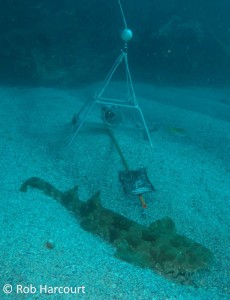
My research examines the effects of future climate change scenarios (i.e., elevated temperatures, elevated CO2, low oxygen, increased turbidity) on physiological performance and movement of reef/tropical sharks and fish. I choose species according to the environmental conditions they are already experiencing. For example, the epaulette shark makes a great model for a species that would presumably be quite tolerant to dramatically fluctuating environmental conditions because of the habitat it occupies. Epaulette sharks bury themselves in the coral reefs and shelter in small caves and crevices. They are active at night when low tides and respiring coral can cause oxygen levels in the shallow pools to decrease and CO2 levels to increase greatly. Also, given they are found in shallow coral reef flats, they also experience dramatic temperature changes. Most of my work thus far has been on adults, but my group is also currently looking at early stages of development. This poses particularly interesting questions because usually animals can move if conditions are unfavourable. Epaulette sharks develop in egg cases that are laid on the reef, sometimes tucked deep in the reef matrix. Therefore, the egg and developing embryo inside will experience all of the fluctuations in water quality that occur, as the embryo cannot move until the egg hatches, which sometimes takes several months. The hatched neonate also poses an interesting model, as they are small and don’t yet swim to move around but rather “walk” using their paired fins. Being so small, they also use the cracks and crevices of the reef as shelter and protection from predation and therefore would also need to be quite tolerant of fluctuating water quality. On the other end of the spectrum, the faster, more active, and more “shark-like” species may not have as well developed tolerance to changes in water quality, as they do not see those conditions as often. I am looking at blacktip reef and sickle fin lemon sharks to examine this. But an interesting caveat here is that the mothers pup the babies (sometimes 10-12 at a time) in very shallow lagoons and mangroves that would also experience dramatic fluctuations in water quality. The question is then, do the babies have to make physiological tradeoffs to live in challenging lagoons in order to avoid predation and exploit food sources? So, there may be a developmental component where babies can acclimate to changes in temperature, oxygen, CO2, etc. However, it also may be that elasmobranchs in general possess the necessary mechanisms to tolerate a variety of conditions due to their evolutionary history reaching back hundreds of millions of years when the climate was much more unfavourable than today. I have also examined temperature effects on blue spotted whiptail rays and looked at changes in blood chemistry upon exposure to elevated CO2 and low pH in sandbar sharks. Ultimately, my research program is set up to understand the evolutionary significance and functional importance of maintaining physiological performance during stress, address the impact of poor water quality, habitat degradation, and climate change, and predict capacity for acclimation and adaptation, as proposed for this research in reef sharks.

jodie_rummer2

In your opinion, how can people help save sharks?

Education, communication, and outreach are key. We need more basic science (e.g., how do systems work, how resilient are different species and what is the basis… habitat, evolutionary history, development/life-history?) so that we can apply this knowledge to ask and answer questions about contemporary issues plaguing elasmobranch populations such as climate change, habitat destruction, overfishing, etc. This alone needs to be communicated to the general public… the importance of basic science. Then, I think it’s important for scientists to learn how to communicate the importance of their research and findings to a broad audience, young (next generation of conservationists and scientists in some cases) and old (tax-payers).

How did you get involved in shark research and what advice would you give those interested in studying them?

I got involved first by focusing my graduate education (Master’s and PhD) and post-doctoral experience on comparative physiology, specifically fishes. As I mentioned, we need more of the basic science. Without it, we can’t properly ask and answer the questions needed to solve today’s problems. So, starting with a really solid foundation in the biology, physiology, biochemistry, and evolutionary history of a group of animals, such as the fishes, is a great place to begin. Then, if you understand how an organism works from the inside out and how it functions in its environment, you can choose the most appropriate species to study for the questions that you have.

jodie_rummer1

Please provide links to any of your research you would like to showcase.

Summary: Field Trip to Moorea, French Polynesia.

Dr. Jodie Rummer TEDx talk

ARC Centre of Excellence for Coral Reef Studies

website: www.jodierummer.com

twitter: @physiologyfish.

Diving Deeper with Riley Elliot

Riley_Elliott 3

Briefly can you describe the focus of your research and the species you work on?

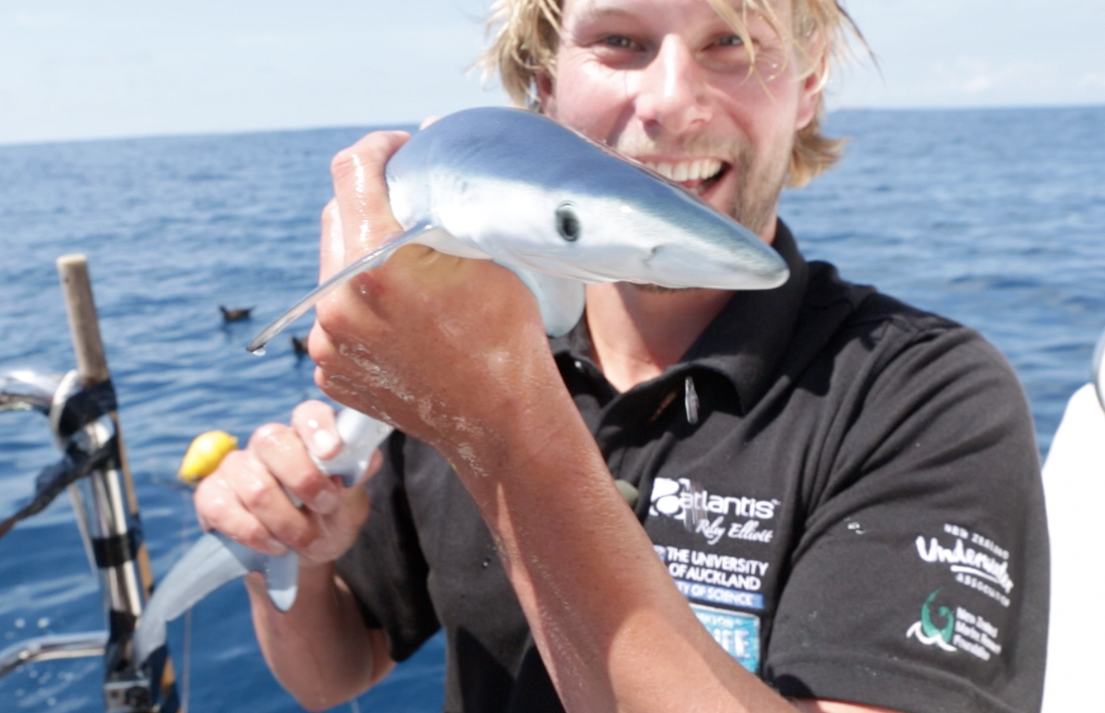
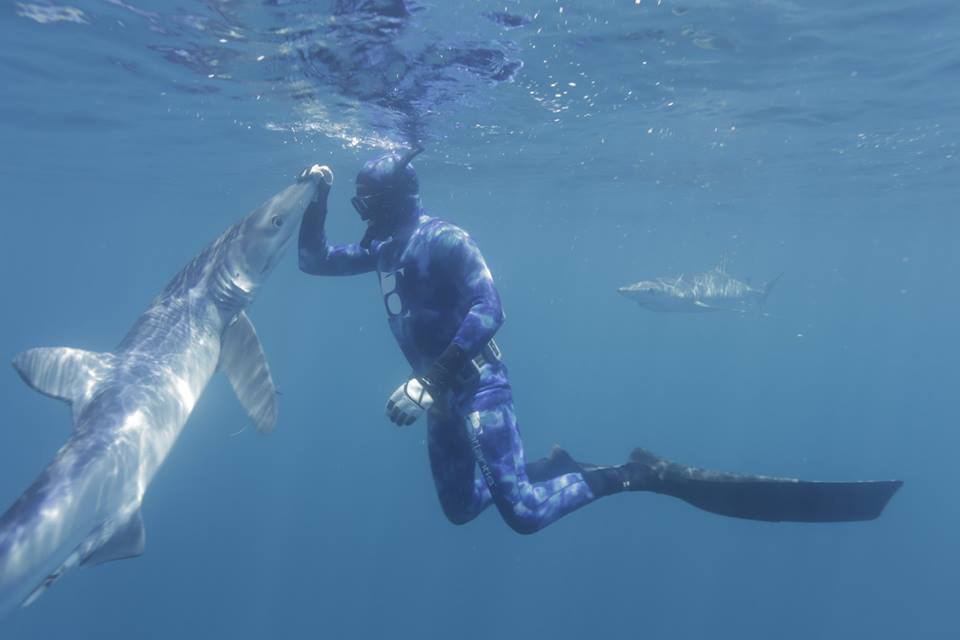
I am defining the migration, critical habitat, behavior and ecological role of the south Pacific Blue shark (prionace glauca) using satellite tags.

Justification of this research is that we know extremely little about this highly utilized species of shark. It is estimated that their exploitation for shark fin and meat may be exceeding the maximum sustainable yield on a global scale. The blue shark is the most abundant, widely and deeply distributed shark of all shark species meaning its ecological role is likely an extremely significant one. With the unknown nature of population sizes, critical habitat use and sustainability, its ecological value is being put at risk.

In your opinion, how can people help save sharks?

By becoming educated on what sharks really are and what they do for the marine environment. Then go do a sustainable and respected ecotourism dive, so you can actually see one in real life in the wild. It will change your perception instantly, from fear to fascination, and you will, as I and many others have, become a shark addict. As Baba Dioum famously said, “In the end we will conserve only what we love, we will love only what we understand, and we will understand only what we are taught.”

Riley_Elliott 1

How did you get involved in shark research and what advice would you give those interested in studying them?

I followed my passion. That was animals and the ocean. I surfed, dived, spearfished and freedived and so I wanted to know how the environment I utilized so much worked. I worked hard at school and did subjects that intrigued me. The biology, ecology and geographies, lead into the harder but necessary statistics, GIS, physics, etc. but they all helped explain this world. Because of passion, I did well, and straight A’s led me to university for the privilege of specializing in what I wanted to know more about. I valued up-skilling, so I got my PADI, my skippers certificate, first aid, commercial dive cert, which enabled me to do my own field work. I learned mechanics through broken engines at sea, I learned forecasting by surfing and boating, I did a research internship in South Africa, and thats were I addicted to sharks but only because I was able to function in their world. I had the skills to work at sea, and that is the fundamental difference between people who want to study sharks, and those that can. Education is key. It enables the dream.


Please provide links to any of your research you would like to showcase.

Shark Tracking Website

TedX Talk

University of Auckland Profile Video

Discovery Channel Profile

Shark Scientist Facebook Page

Shark Man TV Website

RileyElliott.com

SOS Charity Website


Diving Deeper with Meaghen McCord

Meaghan_McCord 2

Can you describe the focus of your research and the species you work on?

I have conducted research on approximately 30 species of sharks, skates & rays. As far as the “charismatic” species, my work has focused on blue, mako, porbeagle, soupfin (school), bull, and sevengill cowsharks. Currently my research is focused on range-restricted sharks found only in southern Africa, including: spotted gully, pyjama, dark, brown, puffadder and leopard catsharks. Many of these species are Near Threatened or Endangered due to anthropogenic activities, climate change and coastal habitat degradation. The focal areas of my research have included: dietary analyses, stock assessment, age and growth, movement ecology, fisher impacts on survivability, and behavioural ecology. My current research interest includes understanding the role of apex predators (such as sharks) in maintaining the health and integrity marine ecosystems.

Meaghan_McCord 3

In your opinion, how can people help save sharks?

There are several actions people can undertake to help conserve sharks. These include:

Contribute to a shark research organization. Most of these groups lack funding to support their research and would gladly receive donations/contributions from people to help conduct their work. But make sure you research the organization prior to making a donation, in order to ensure your donations will be used the way you want.

Get involved with shark citizen science programmes. There are a growing number of programmes around the world which rely on data collected by the non-scientist citizen. Things you can do include collecting egg cases (mermaid’s purses) from the beach, record unique shark sightings and/or help deliver educational material to dispel myths about sharks (thereby helping protect them).

Eat sustainable seafood. Many people don’t realize that most of the world’s fisheries catch shark (as target or non-target species). In non-target fisheries, most sharks are discarded back into the water and may not survive the capture process. Also, avoid eating prawns altogether. Prawn trawl fisheries are well-known as the most destructive fisheries, and only about 1-2% of their catch is actually prawns. 98-99% of their catch includes sharks, turtles, marine mammals and other fishes. Many of these animals are endangered or near threatened. Prawn trawl fisheries, by their very nature, destroy sensitive habitats as these fisheries only occur in sub-tropical and tropical areas which are defined by coral reef ecosystems. If you eat seafood at all, ensure your fish is captured in sustainable fisheries with the least bycatch.

Meaghan_McCord 1

How did you get involved in shark research and what advice would you give those interested in studying them?

For as long as I can remember, I have been interested in sharks. I studied Marine Biology at Dalhousie University in Halifax, Nova Scotia, where I obtained my Honours Degree studying the diet of blue sharks Prionace glauca. At the start of my university career I, like many other people, was interested in studying the behavior of large charismatic species such as great white sharks. However, when I got my first opportunity to do volunteer work (I volunteered for 3 summers before being taken on as a student!) with Dr. Steven Campana (former head of the Canadian Shark Research Lab), I discovered just how many amazing shark species are out there and how very little is known about the majority of them. This new knowledge inspired me to seek out interesting study opportunities abroad and, in 2003, I moved to South Africa to conduct my Master’s research on the stock assessment and fishery management of soupfin (school) sharks Galeorhinus galeus. Steve (Campana) inspired me to carry on with shark research, and I attribute much of what I have learned to his mentorship during my undergrad career.

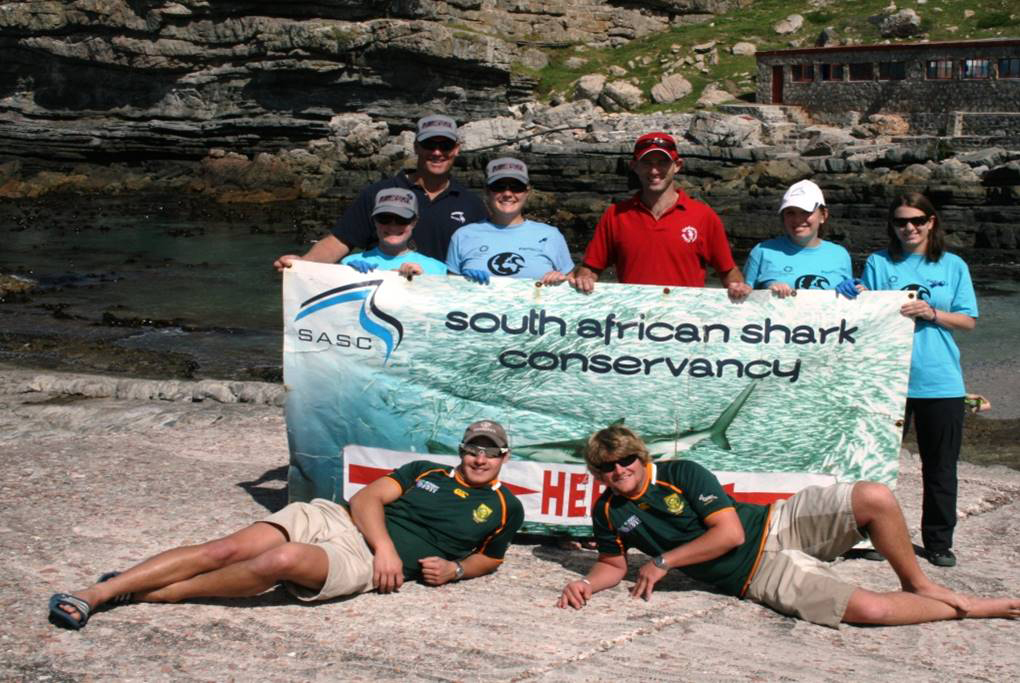
For those people interested in studying sharks, I encourage them to get as much volunteer/internship experience as possible. Build a network of contacts and prove to them that you are passionate about – and dedicated to – your future career as a shark scientist and/or conservationist. It is not an easy road in many cases. Funding for shark research is limited, and many professors are inundated with requests from students who want to study “sexy” sharks. Set yourself apart from the rest, gain a lot of experience and don’t always focus on the big charismatic species. There are so many more species of shark (all of whom are charismatic in their own right!) out there who require advocates to conserve their populations. Keep in mind that you create your own opportunities and, with a good bit of luck, you can become a shark scientist. I was incredibly lucky: I started my own NGO (South African Shark Conservancy) and have built a fantastic team who are all completely dedicated to shark and ocean conservations.


Please provide links to any of your research you would like to showcase.

My organization has been very lucky to have received project funding from some wonderful organizations including the Save Our Seas Foundation, PADI Project Aware &, currently, the Earthwatch Institute. For more information on some of our projects, check out the following links:

South African Shark Conservancy

FB: The South African Shark Conservancy

Tw: @SASC3

YouTube: https://www.youtube.com/user/SharkConservancy

Instagram: sharkconservancy

Live your own Shark Week with SASC & Earthwatch in 2016 (http://earthwatch.org/expeditions/discovering-sharks-in-south-africa)

Bull Shark Ecology Project: (http://saveourseas.com/project/zambezi-sharks-south-africa/)

RecFishSA Project: (http://saveourseas.com/project/sharks-on-the-line/)

This Project is Rubbish marine debris research (http://www.projectaware.org/blog/south-african-shark-conservancy/may-05-14/project-rubbish)


Diving Deeper with Dr. Charlie Huveneers

Charlie_Huveneers 1

Briefly can you describe the focus of your research and the species you work on?

I lead the Southern Shark Ecology Group (SSEG) research lab at Flinders University. The SSEG delivers high quality research on the biology, ecology and population status of chondrichthyan (sharks, rays, skates, and chimaeras), as well as assessments of their vulnerability to fishing pressure, interactions with humans and related public perception. The primary aims of our research include the determination of life history characteristics of sharks to improve assessments of their vulnerabilities to human, environmental and climatic impact, and investigations of their movement dynamics and residency patterns using acoustic telemetry and satellite tagging. Our group also provides research-based advice to managers and policy makers on issues associated with sharks and rays.

Over the years, we have worked on a wide range of species including wobbegongs, Port Jackson sharks, grey reef sharks, bronze whalers, dusky sharks, blacktip reef sharks, nervous sharks, smooth rays, fiddler rays, and white sharks.

Charlie_Huveneers 2

Charlie_Huveneers 3

How did you get involved in shark research and what advice would you give those interested in studying them?

I started being interested in sharks at 11 years old during my last year of primary school and spent my entire high school learning about them through books and non-sensationalistic documentaries. I then worked towards obtaining as much volunteering and field experience as possible throughout my undergraduate degree, which helped me obtaining a PhD scholarship at Macquarie University in Sydney.

Students interested in a career in marine biology or shark ecology should be motivated and need to differentiate themselves from the rest of the other students. There are many opportunities to get involved and gain additional experience outside of the normal degree curriculum. Such experience will enable them to increase their knowledge outside of the theoretical components of their degree and allow them to meet senior scientists and other like-minded people.


Please provide links to any of your research you would like to showcase.

Southern Shark Ecology Group

Flinders University: Dr. Charie Huveneers